
The Namesake Project: Why Facilities Need to Tell the Story Behind the Field
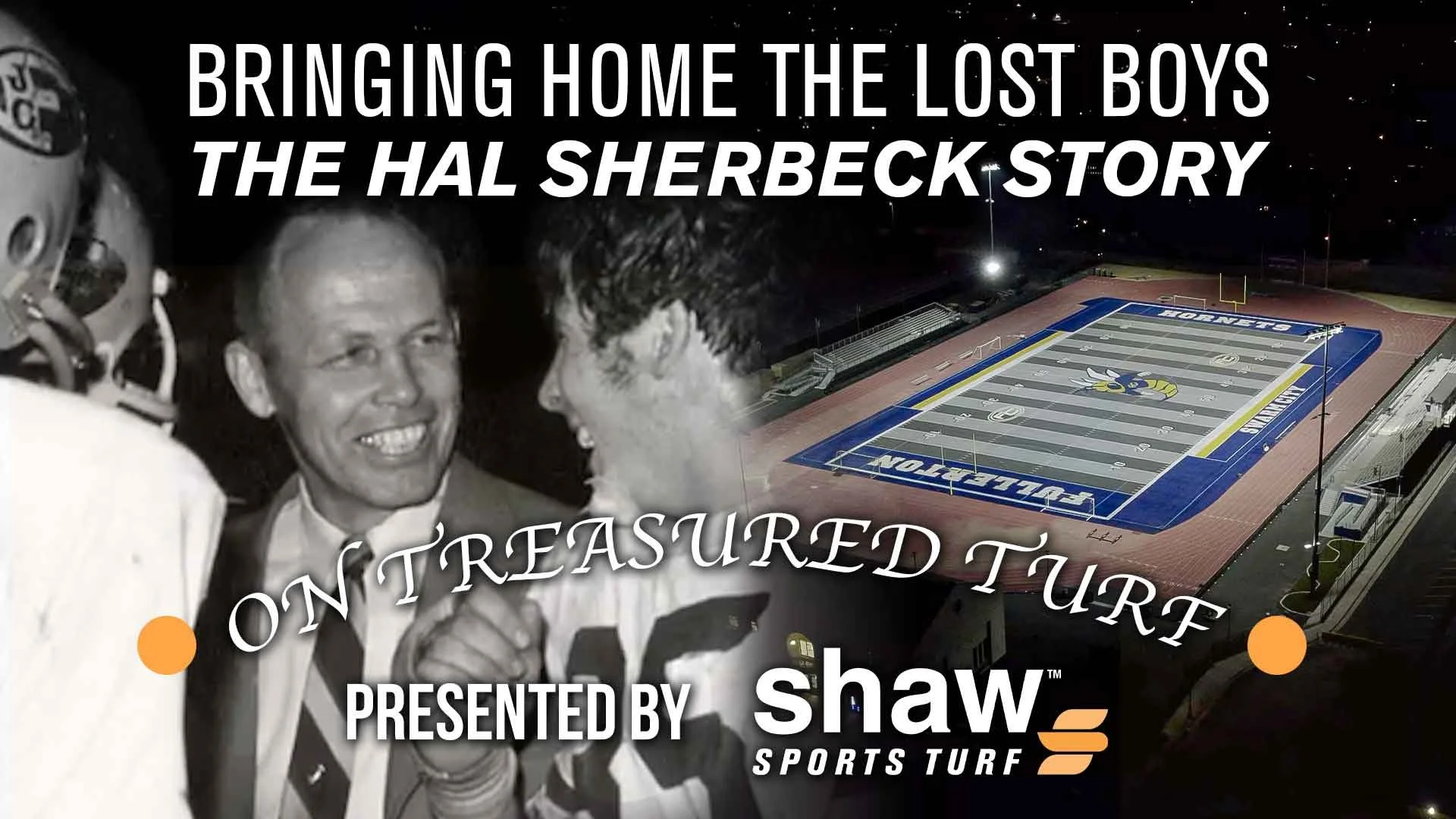
Full Film: Fullerton College’s Field Namesake Documentary
Trailer: Hal Sherbeck documentary
Every major field and stadium in America is named after someone. A coach who built a program. A donor who believed in youth sports. An athlete who changed the game. A community member who fought for the facility to exist.
And yet, AS THE YEARS GO ON after the dedication plaque was mounted, most people using that field have no idea who it's named after. They don't know the story. They don't know why.
This is a massive opportunity for the brands that install, build, and outfit those facilities. And it starts with one simple insight: the story behind the field is more powerful marketing than the field itself.
The Problem: Facilities Without Stories
A scoreboard gets installed. A turf system is laid down. A new press box opens. These are visible improvements—and they should be celebrated. But after the ribbon cutting, the narrative stops.
Here's what most facility marketing looks like:
"State-of-the-art turf system installed at [Facility Name]"
Before/after photos of the field
Specifications: fiber type, drainage, durability ratings
Logo placement on the website and in the facility
It's functional. It's not memorable. It doesn't move people.
Now here's what happens when you tell the story behind the facility instead:
The Branded Documentary Model
A few years ago, we produced a documentary for Shaw Sports Turf about a legendary college FOOTBALL coach—the namesake of Fullerton College's field. The film was 12 minutes of pure storytelling: interviews with former players, archival footage, footage of the field itself woven throughout. It wasn't about the turf. It was about the coach's impact on THOUSANDS of athletes' lives. And it just so happened that his legacy lived on the field Shaw had installed.
Here's what happened:
The documentary was shared across Shaw's network, reaching facility managers, athletic directors, and coaches who would never click a product spec sheet.
Shorter clips—30 seconds, 60 seconds, 90 seconds—became social content. More than a dozen pieces of content came from one production.
The film created an emotional association between Shaw's brand and the values the coach embodied: excellence, mentorship, legacy.
Facility buyers began reaching out asking, "Can Shaw do this for our field?"
That's not advertising. That's brand storytelling.
Why This Works (The Psychology)
When a facility buyer or architect sees a turf spec, they're evaluating a commodity. When they watch a documentary about the person who made the field matter, they're evaluating a partner—someone who understands that fields are about people, not just infrastructure.
The branded documentary does four things:
Differentiates the brand. No competitor is telling this story. It's unique to whoever invested in the project.
Creates emotional loyalty. People don't remember specs. They remember the moment a coach changed a player's life, or a facility became a gathering place. That memory now carries your logo.
Generates massive content. One 15-minute documentary becomes 12–15 social clips, email assets, sales deck material, and organic LinkedIn content. A single production gives you six months of marketing runway.
Gets organic reach. A 60-second clip of a former player talking about their coach will outperform any paid ad. People share stories, not specs.
The Ripple Effect: How One Story Reaches Entire Athletic Networks
Here's something even more powerful: the facility that commissions the documentary becomes your distribution channel.
When a school or program debuts their Namesake film—whether it's shared at a banquet, streamed during pre-game, or posted to social media—they're broadcasting it to more than just their own community. They're reaching:
Other programs in their conference or division. Those teams play games on the same field. They watch the film. They see themselves reflected in the story. And they start thinking, "We need to tell our story too."
Schools at higher and lower competitive levels. A college program's documentary resonates with high school programs in the same pipeline. High school programs resonate with youth facilities below them. The story has vertical reach because athletic progression is built on these networks.
District and regional facility builders. When athletic directors and facility managers see a peer program commissioning a professional documentary, it becomes a proof point. "If State University did this, maybe we should too."
The distribution is organic. The facility that hired you becomes an evangelist. Conference newsletters pick it up. Booster clubs share it. Alumni groups circulate it. Social media algorithms favor it because it's genuine emotional content, not advertising.
One documentary. One facility. Dozens of viewing communities. Hundreds of potential future customers seeing your work and your brand position.
Here's something that happens when you commission a Namesake documentary that most brands miss: you become part of the community story yourself.
The documentary centers the person the field is named after—but it also quietly positions your brand as the organization that believed that story mattered enough to tell it. You're not just installing a product. You're stewarding a legacy. That's a different conversation entirely.
In the community where the field lives, the film becomes an asset for:
Local media and schools — They want to celebrate their heroes. A high-quality documentary about the namesake becomes a centerpiece for community events, athletic banquets, alumni gatherings, even graduation ceremonies.
The facility itself — The film plays in the press box, on the scoreboard during pre-game, in the lobby. Visitors and families see it. The facility leverages it to attract donors, sponsors, and future users.
Your brand as community partner — When you show up with this film, you're not a vendor. You're a curator of stories, a believer in what those fields represent. Facility managers, athletic directors, and civic leaders remember that. They talk about it. They refer you to other facilities in their network.
Festival and public screenings — Independent theaters, museums, and community centers screen sports documentaries. A Namesake film about a local hero can be submitted to regional film festivals, screened at sports banquets, featured at youth athletic events. Every screening is an hour of your brand being the centerpiece of a room full of stakeholders.
This is how you own a market. Not through the loudest ad budget. Through the deepest story.
The Business Case: Who Should Commission This?
Sports turf manufacturers: Your product is in the field. A documentary about the field's namesake puts your install in the visual narrative without a hard sell. Facility managers and architects see the product in context—not as an ad, but as part of the legacy. Plus, you become the trusted brand in that community—the one who cared enough to preserve and celebrate its history. That credibility travels when facility managers reference you to other schools and parks in their district.
Scoreboard and stadium equipment makers: Same logic. The scoreboard, BLEACHERS, PRESS BOx, AND GOAL POSTS ARE visible in every scene. It becomes part of the story of the facility, not a separate marketing asset. Community screenings and festival selections position you as a steward of local sports heritage, not just a vendor.
Sports facility builders and designers: Commissioning a documentary about a project you designed tells future clients what you stand for—not just what you build. You own the narrative in that market for years.
Sports foundations and nonprofits: A documentary about your organization's namesake or founding story is proof of your mission and impact. Festival screenings and community viewings amplify your message far beyond traditional fundraising channels.
The Scope: What a Namesake Documentary Looks Like
A typical "Namesake Project" involves:
Research phase (3–4 weeks): Interviews with people who knew the namesake—former players, coaches, family, community members. Archival photo/video gathering.
Production (2–3 days on-site): Interviews, facility B-roll, action footage, establishing shots. We shoot for the edit—specific moments that tell the narrative arc.
Post-production (4–6 weeks): Edit, color grading, sound design, motion graphics, and revisions.
Deliverables:
1 full-length documentary (10–25 minutes)
3–5 trailer/teaser clips (30–90 seconds each)
8–12 social clips (15–60 seconds)
Still photography package
Behind-the-scenes/making-of contenT
Timeline: 8–10 weeks from kickoff to delivery. Festival submissions and community screenings extend engagement for 12+ months post-delivery.
The Content Flywheel
Here's where the ROI compounds:
Week 1–2: Launch full documentary. Announce on LinkedIn, email list, social channels. Submit to 3–5 relevant film festivals (sports documentaries, regional/local festivals, education film circuits).
Week 3–6: Post social clips weekly (2–3 per week). Interview athletes and coaches who appear in the doc. Get re-shares.
Month 2–6: Repurpose clips into email sequences. Add to sales decks. Feature in facility tours and pitches. Use in RFPs and bid materials. Host or co-host a community screening event. Invite facility leadership, local media, alumni, donors. Position your brand as the curator of this story.
Months 3–12: Festival selections and awards generate PR opportunities. "Our documentary about [Namesake] selected for [Festival Name]" becomes LinkedIn content, email announcement, and talking point in sales conversations. Community screenings continue at schools, civic events, and regional venues.
Ongoing: The documentary lives on your YouTube channel, your website, and your partner's digital properties. It keeps working. It also positions you as a thought leader and community steward—not just a vendor—which compounds credibility when you pitch other facilities in the region.
One production. TWELVE months of content. Dozens of touch points with your ICP.
Why Now?
Branded documentaries aren't new. But they're rare in the sports facility space, which means there's a massive opportunity for early movers. The manufacturer or builder who invests in telling facility namesake stories will stand out dramatically against competitors doing the same old product marketing.
More importantly: the first mover in a region owns it. Once you've produced a documentary about a facility in a market, you've established yourself as the brand that cares about legacy and community. Other facility managers in that district, alumni networks, and civic leaders will reach out. You'll become the default choice for future facility projects—not because of your spec sheet, but because you've already proven you understand what their fields mean.
And it doesn't stop at one facility. When that school shares the film across their athletic conference or division, other programs see it. Programs at higher and lower competitive levels take notice. Facility managers in the region start asking your customer: "Who made that film? We want to do something like that." Your one documentary becomes a sales tool for dozens of future facility projects across athletic networks you never had to directly pitch.
Plus, the people whose stories you're telling—the former players, coaches, and community members—will evangalize for you. That's earned media money can't buy. And every festival selection, every community screening, every mention in local media adds another layer of proof that you're the partner who takes their story seriously.
The Conversation Starters
If you're a turf manufacturer or equipment maker, these are the questions to ask:
Which of your customers has a field or facility named after someone notable?
Who's the story that hasn't been told yet?
What would it cost to lose that bid because a competitor had a better narrative?
The Namesake Project is the answer to all three.
Ready to explore what a branded documentary could do for your brand?